 Reviews


 Proudly American


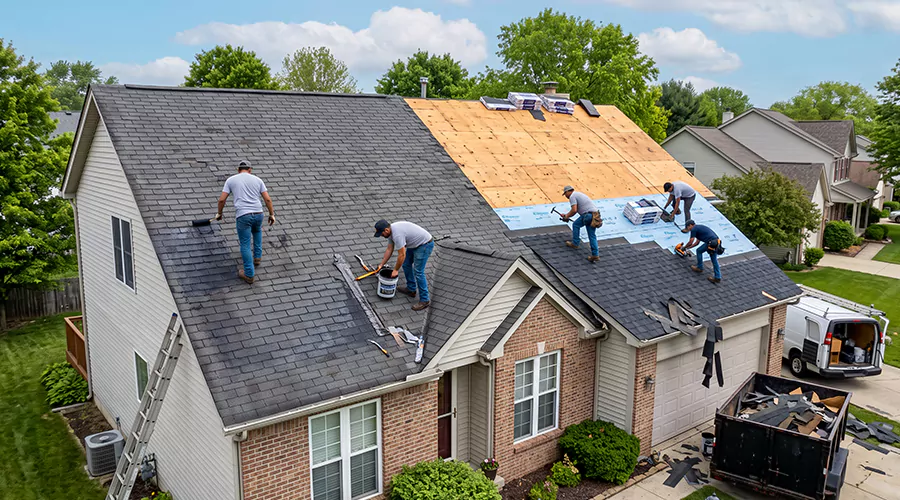
Roof restoration is often better than replacement when the roof is still structurally sound and most problems are limited to minor leaks, flashing, coatings, or isolated material damage. In 2026, many residential restoration projects cost about $2,500 to $7,000, while water damage restoration may be needed when roof leaks have caused moisture damage inside the building. Full replacement usually costs more because much more material and labor are involved.
The better choice depends on condition rather than age alone. A roof with widespread deck damage or major sagging is usually a poor restoration candidate.
What is the Difference Between Restoration and Replacement?
Roof restoration keeps most of the existing roof while repairing defects and renewing its protective surface. Replacement removes a much larger part of the roofing system and installs new materials. Restoration is therefore less disruptive when the roof deck and supporting structure remain suitable to keep.
| Factor | Restoration | Replacement |
|---|---|---|
| Existing roof kept | Mostly yes | Mostly no |
| Project time | Usually shorter | Usually longer |
| Waste generated | Lower | Higher |
| Best for surface wear | Yes | Often unnecessary |
| Best for structural failure | No | Often yes |
The goal is not to choose the cheaper option automatically. The goal is to avoid replacing a roof that still has useful service life.
When is Roof Restoration the Better Choice?
Roof restoration is usually the stronger option when deterioration is limited and the roof deck remains dry and stable. Small leaks or worn coatings can often be corrected without removing a serviceable roof.
Good candidates often have:
- Localized flashing defects
- Limited broken materials
- Surface fading
- Minor coating wear
- Isolated corrosion
- Small repairable leaks
- Sound roof decking
A roof that still has useful life can benefit from restoration because repairs address weak points before they become larger failures.
When is Replacement the Better Choice?
Replacement is usually better when damage has reached structural or waterproofing components across large areas. Repeated patching becomes less useful once the supporting materials have lost strength.
Replacement deserves stronger consideration when:
- Roof decking is soft or rotted.
- Large areas sag between supports.
- Leaks return after several repairs.
- Widespread material failure is visible.
- Structural framing needs major repair.
- The existing system cannot accept another compatible treatment.
A coating cannot rebuild weakened decking. Surface work over structural failure can also make later leaks harder to diagnose.
Which Option Costs Less in 2026?
Restoration usually has the lower upfront cost because less material is removed. Roof restoration cost commonly falls around $2,500 to $7,000 for many residential projects in 2026. Coating-focused work may cost less, while extensive repair can move the total higher.
The cheaper project is not always the better value. A $5,000 restoration that adds several useful years can make sense on a sound roof. The same work is poor value if widespread deck failure forces replacement soon afterward.
How Does Roof Material Affect the Decision?
Different roofing materials age in different ways. Tile can remain usable while underlayment or flashing becomes the main concern. Metal can often remain in service when corrosion has not weakened the panels.
Tile roof restoration may make sense when most tiles remain intact and isolated damaged pieces can be replaced. The underlayment still needs inspection because surface appearance does not show its condition.
Metal roof restoration is often practical when panels remain sound and localized corrosion can be treated before a compatible coating is applied. Rust-through or widespread panel failure can shift the decision toward replacement.
How Much Service Life Can Restoration Add?
A suitable restored roof can often gain about 5 to 15 years of usable service. The actual result depends on the original roof condition and the quality of preparation.
| Existing Condition | Better Direction |
|---|---|
| Sound structure with aging surface | Restore |
| Repairable flashing problems | Restore |
| Localized leaks | Repair then restore |
| Widespread underlayment failure | Consider replacement |
| Rotted decking | Replacement |
| Structural sagging | Structural repair or replacement |
A refreshed surface should not be mistaken for renewed structural life.
What Can You Check Yourself?
A ground-level inspection can help you decide whether wear looks localized or widespread. You do not need to climb onto the roof.
Check for:
- Missing or broken roofing pieces.
- Large areas of visible corrosion.
- Repeated ceiling stains.
- Uneven or sagging roof sections.
- Damaged flashing.
- Damp attic insulation after rain.
- Previous patches across many areas.
Photograph the same locations after storms so changes are easier to track.
When Should You Call a Professional?
Professional assessment is appropriate when you cannot tell whether damage is limited to the roof covering or has reached the deck below. The decision becomes especially important when a restoration proposal is close in price to larger repair work.
Consider professional evaluation when:
- Several areas leak.
- Roof decking may be wet.
- Sections visibly sag.
- Many tiles are damaged.
- Metal panels have deep corrosion.
- Previous repairs keep failing.
Ask for structural condition and surface condition to be described separately.
How Can You Make the Right Choice?
Start with condition before comparing prices. A restoration quote and replacement quote are only useful when both describe the same underlying problems.
Before deciding:
- Confirm whether decking is sound.
- Identify each active leak.
- Separate surface work from structural work.
- Ask how much service life the work should add.
- Compare the repair scope rather than only price.
Conclusion
Roof restoration is often better than replacement when the structure remains sound and the main problems are surface wear or repairable leaks. Replacement becomes the stronger choice when decking or large sections have failed. Compare remaining service life with repair cost rather than choosing only by price. If hidden structural condition is uncertain, professional inspection can help prevent spending money on a short-lived surface fix.
Frequently Asked Questions
Is restoration always cheaper than replacement?
Usually, but extensive repairs can make restoration less attractive when the roof is already close to major failure.
How many years can restoration add?
A suitable restored roof can often gain about 5 to 15 years depending on material and condition.
Can a leaking roof be restored?
Yes, when the leak comes from repairable defects and the source is corrected first.
Is an old roof automatically a replacement candidate?
No. Structural condition matters more than age alone.
Can a roof be restored more than once?
Sometimes. Another cycle may be possible when the roof remains structurally suitable.
Does restoration include structural repairs?
Minor repairs may be included, but major deck or framing problems can move the project beyond normal restoration.